Thinking Your Shed's Just a Box? Think Again.
You've got a shed out back, right? Maybe it holds your tools, maybe it's a workshop, or perhaps even a quiet escape. Whatever you use it for, if you're thinking about insulating it, that's a smart move. But I've seen folks around Waxahachie make some real head-scratchers when they tackle this project. I want to help you steer clear of those common mistakes. It's not just about throwing some pink stuff up there; there's a bit more to it than that.
Mistake #1: Ignoring the Foundation and Floor
This is a big one, and people often miss it. Everyone focuses on the walls and roof, which is fine, but what about the ground underneath? If your shed sits on concrete or a simple wood platform without any barrier, you're basically inviting moisture and temperature swings right up from below. Here in Waxahachie, with our clay soils, we get a lot of ground moisture, especially after a good rain. That dampness can wick up into your shed, making your insulation work harder and potentially leading to mold or mildew problems. You really need a vapor barrier and some insulation under that floor, or at least a good air gap if it's elevated. Don't skip the floor; it's literally the groundwork for a comfortable shed.
Mistake #2: Choosing the Wrong Type of Insulation for the Job
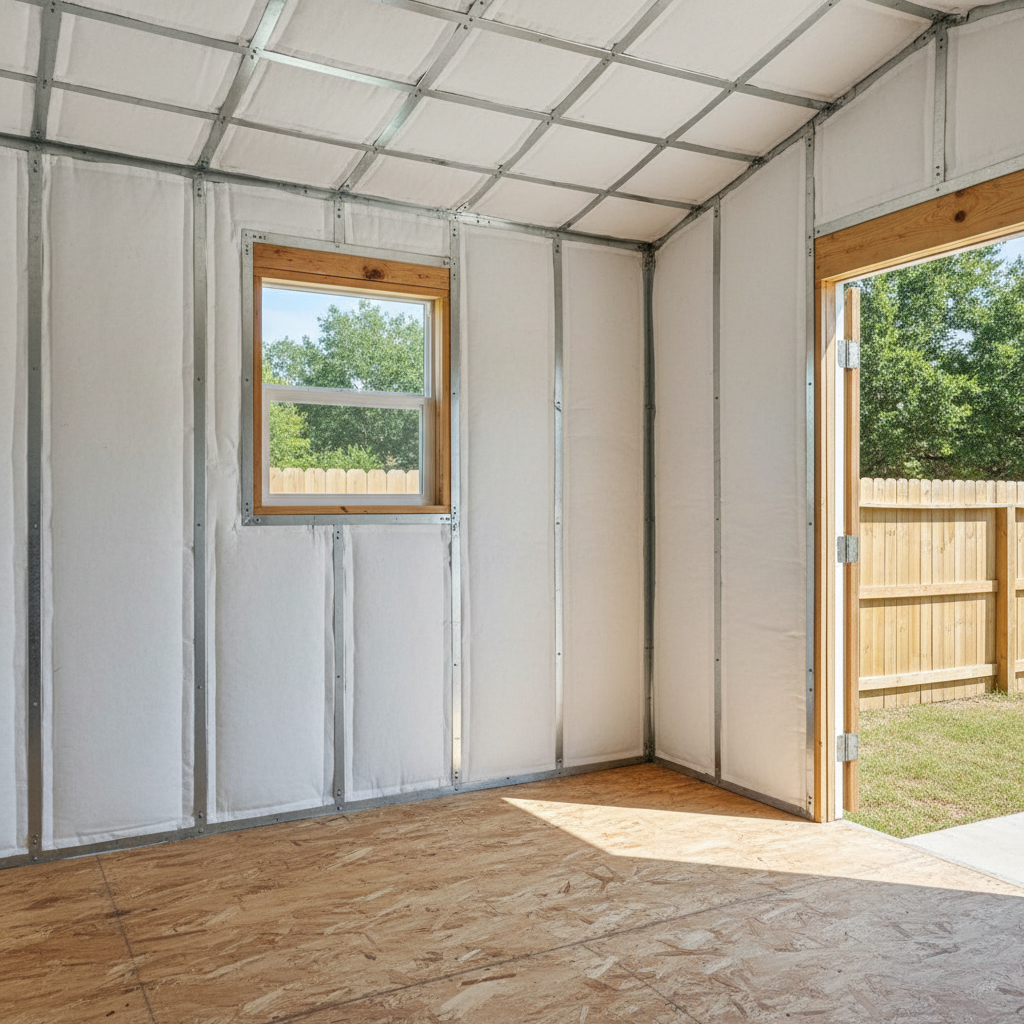
Not all insulation is created equal, you know? What works great in your attic might be a terrible choice for a shed. I see a lot of folks just grab whatever's cheapest or easiest at the big box store. But think about it: sheds often have exposed studs, they're not always climate-controlled like your house, and they can be prone to critters. Fiberglass batts are common, sure, but if they get damp, their R-value drops like a rock, and they can sag. Spray foam is fantastic for sealing everything up tight, but it's a bigger investment and needs professional application. Rigid foam boards are a solid choice for sheds because they're moisture-resistant and offer good R-value without taking up too much space. Consider what you're storing, your budget, and how much you'll actually use the shed. Don't just guess; do a little homework or ask someone who knows what they're talking about.
Mistake #3: Forgetting About Ventilation
This goes hand-in-hand with insulation, especially in a shed. You can insulate your shed perfectly, but if you don't have proper ventilation, you're going to create a sauna in the summer and a damp, moldy mess in the winter. Our Texas summers are brutal, and even with insulation, that heat needs somewhere to go. Ridge vents, soffit vents, or even just a couple of small gable vents can make a world of difference. They let hot, moist air escape and cooler, drier air enter, preventing condensation and keeping your shed's temperature more stable. Without it, you're just trapping all that heat and humidity inside, making your insulation less effective and potentially damaging your stored items or tools.
Mistake #4: DIYing When You Should Call a Pro (or at least get advice)
I'm all for a good DIY project, believe me. But sometimes, people bite off more than they can chew, or they don't realize the nuances involved. Insulating a shed isn't rocket science, but getting it *right* can save you a lot of headaches and money down the line. I've seen projects where insulation was installed backward, or vapor barriers were put on the wrong side, or gaps were left everywhere. That's just wasted effort and materials. If you're unsure, or if your shed is particularly large or complex, it's worth getting a quote or at least a consultation. A quick chat with someone who does this for a living, like us at Mighty Insulation, can help you avoid those rookie mistakes and ensure your shed is comfortable and protected for years to come. Sometimes, a little expert advice upfront saves you from a big headache later.
Mistake #5: Not Sealing Up All the Gaps and Cracks
This is a major energy killer, and it's so easy to overlook. You can have the best insulation in the world, but if air is leaking in and out through every little crack and crevice, you're just throwing money away. Think about the doors, windows, and any penetrations for electrical wiring. Use caulk, weatherstripping, and expanding foam to seal up those gaps. I've seen sheds in older Waxahachie neighborhoods, especially those with original construction that wasn't designed for modern insulation standards, that are practically sieves. A good seal is just as important as the insulation itself. It keeps the conditioned air in and the unconditioned air (and bugs!) out. It's the finishing touch that makes all your insulation efforts truly pay off.
Insulating your shed is a smart investment, but only if you do it right. Take your time, consider these points, and don't be afraid to ask for help if you need it. You'll be glad you did when you're out there enjoying your comfortable, protected space, no matter what the Texas weather throws at us.