Flash & Full Cavity: What's the Deal?
You've probably heard about closed-cell spray foam, right? It's a really good insulation choice, especially here in Texas where we're always fighting that heat and humidity. But then you start looking into it, and suddenly you're hearing terms like "flash and batt" or "full cavity fill." It can get pretty confusing, and honestly, some folks might try to sell you on one without really explaining the other. So, I'm here to clear that up for you, Waxahachie homeowners.
Basically, we're talking about two different ways to put in closed-cell spray foam. Both have their place, but one usually works out better for our specific climate and the kinds of homes we have around here.
Flash and Batt: The Hybrid Approach
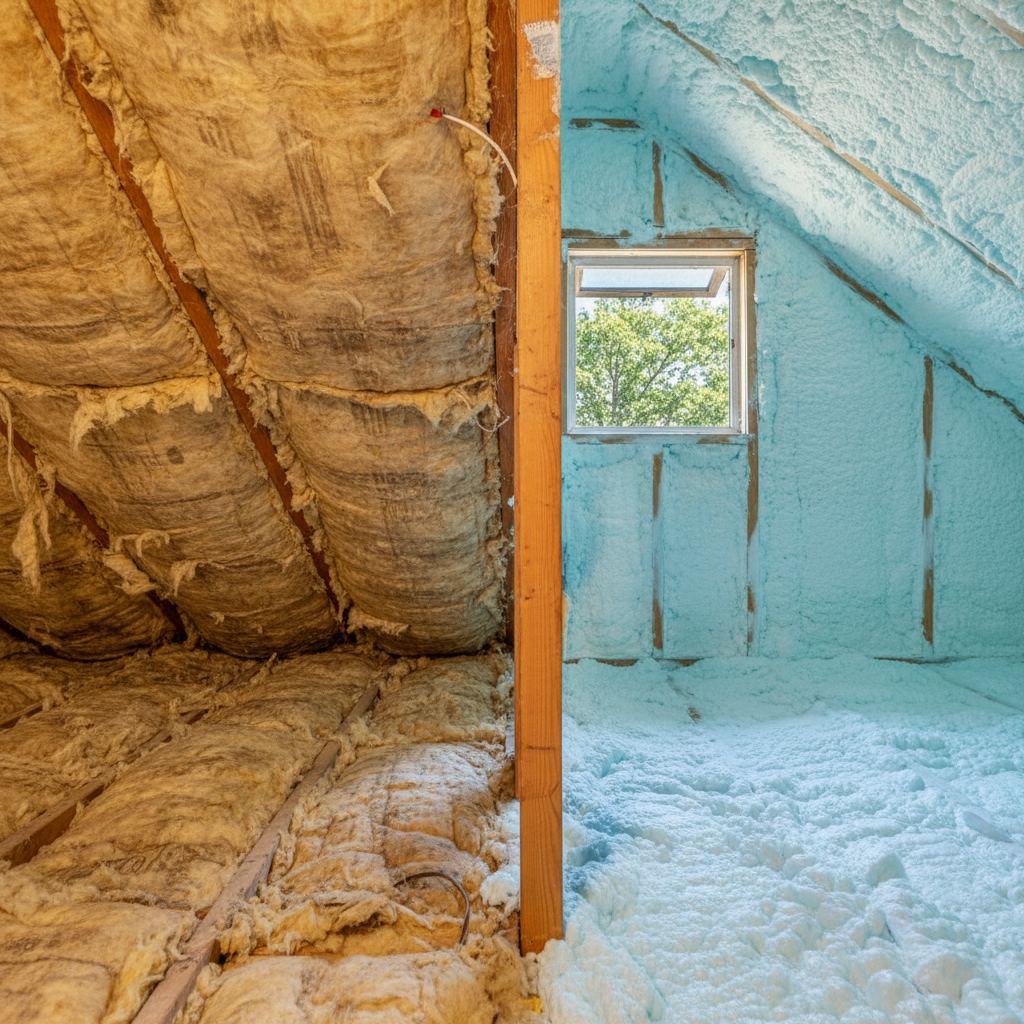
Let's kick things off with flash and batt. This is where we spray a thinner layer of closed-cell foam — usually just an inch or two — right onto the sheathing or inside the wall cavity. It's not meant to fill the whole space, no. The idea is that this thin layer of closed-cell foam creates a fantastic air and vapor barrier. It stops air leaks dead in their tracks, and it handles moisture really well, which is a big deal with our humid summers.
After that thin layer of closed-cell foam dries, we then come back and fill the rest of the cavity with a more traditional insulation, like fiberglass batts or blown-in cellulose. That's where the "batt" part comes in. The closed-cell foam takes care of the air sealing and vapor control, and the batt insulation provides the bulk of the R-value, or thermal resistance.
Pros of Flash and Batt:
- Cost-Effective: You're using less of the more expensive closed-cell foam, so it can be cheaper upfront than a full cavity fill.
- Great Air Sealing: That thin layer of foam still does an amazing job of stopping drafts and air infiltration.
- Moisture Control: It creates a solid vapor barrier, which is crucial for preventing condensation issues inside your walls.
- Good R-Value: When combined with batt insulation, you still get a very respectable R-value for your walls.
Cons of Flash and Batt:
- Two-Step Process: It takes more time because it's two separate insulation applications.
- Potential for Gaps: If the batt insulation isn't installed perfectly against the foam, you can still have small air pockets.
- Less Structural Strength: The thin layer of foam doesn't add as much rigidity to your wall assembly as a full fill does.
Full Cavity Closed-Cell: The Powerhouse Option
Now, full cavity closed-cell spray foam is exactly what it sounds like. We fill the entire wall or ceiling cavity with closed-cell foam. No batts, no cellulose — just foam, from stud to stud, top to bottom. This stuff expands and hardens, creating a dense, rigid, and completely sealed insulation layer. Pretty neat, huh?
When we're talking about a 2x4 wall, that's usually about 3.5 inches of foam. For a 2x6 wall, it's 5.5 inches. Closed-cell foam has a higher R-value per inch (usually R-6 to R-7), so you get a really high R-value even in standard wall depths. Plus, it's an incredible air and vapor barrier all by itself.
Pros of Full Cavity Closed-Cell:
- Superior R-Value: You get the absolute highest R-value possible in your wall cavity, leading to excellent energy efficiency.
- Unbeatable Air Sealing: It's a monolithic barrier. There are no gaps, no seams, nowhere for air to sneak through.
- Exceptional Moisture Control: It's practically impermeable to water vapor, which is a huge advantage in our hot, muggy Waxahachie summers. This is especially important in older homes with pier and beam foundations or in areas prone to ground moisture, like some of the properties closer to the Trinity River.
- Adds Structural Strength: The rigid foam actually bonds to the studs and sheathing, making your wall assembly stronger and more resistant to racking.
- Pest Resistant: Pests don't like to burrow through it.
- One-Step Application: Faster installation on site, generally.
Cons of Full Cavity Closed-Cell:
- Higher Upfront Cost: It uses more of the premium material, so it's typically more expensive per square foot.
- Less Forgiving: Once it's in, it's in. You can't easily remove it or adjust it later.
My Recommendation for Waxahachie Homes
Alright, so which one should you choose for your home here in Waxahachie? For most of my customers, and based on what I've seen work best for our climate, I almost always lean towards full cavity closed-cell spray foam.
Why? Because our biggest enemies here are heat gain, air leakage, and humidity. Full cavity closed-cell foam tackles all three with unmatched effectiveness. The higher R-value means your AC won't have to work as hard during those brutal 100-degree days. The complete air seal prevents conditioned air from escaping and unconditioned, humid air from getting in. And its vapor barrier properties are just fantastic for keeping moisture out of your wall cavities, which helps prevent mold and mildew issues down the line.
While flash and batt is a good system, it's a compromise. You're trying to get the best of both worlds, but you don't quite get the full benefits of either. With full cavity closed-cell, you're getting the absolute top-tier performance for insulation, air sealing, and moisture control. Yes, the initial cost is higher, but the long-term energy savings and comfort usually make it a worthwhile investment. You'll feel the difference, and your energy bills will show it.
At Mighty Insulation, we've installed both, and we've seen firsthand how much of a difference a truly well-insulated home makes. Especially with our clay soils around here, homes can shift a bit over time, and a rigid, fully sealed insulation like full cavity closed-cell foam maintains its integrity better than other options. What's not to love?
If you're building new or doing a major remodel, seriously consider going full cavity. It's a decision you won't regret when that Texas sun is beating down.